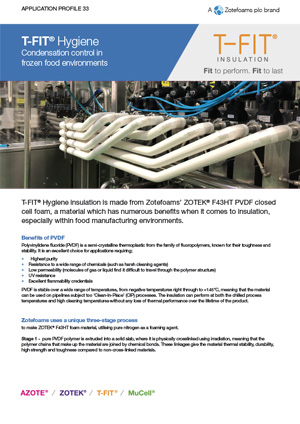
T-FIT® Hygiene insulation is made from Zotefoams’ ZOTEK® F43HT PVDF closed cell foam, a material which has numerous benefits when it comes to condensation management, especially within food manufacturing environments.
Benefits of PVDF for Condensation Management
Polyvinylidene fluoride (PVDF) is a semi-crystalline thermoplastic from the family of fluoropolymers, known for their toughness and stability. It is an excellent choice for applications requiring;
- Highest purity
- Resistance to a wide range of chemicals (such as harsh cleaning agents)
- Low permeability (molecules of gas or liquid find it difficult to travel through the polymer structure)
- UV resistance
- Excellent flammability credentials
PVDF is stable over a wide range of temperatures, from negative temperatures right through to +145°C, meaning that the material can be used on pipelines subject too ‘Clean-In-Place’ (CIP) processes. The insulation can perform at both the chilled process temperatures and high cleaning temperatures without any loss of thermal performance over the lifetime of the product.
Zotefoams uses a unique three-stage process
To make ZOTEK® F43HT foam material, utilising pure nitrogen as a foaming agent.
Stage 1
Pure PVDF polymer is extruded into a solid slab, where it is physically crosslinked using irradiation, meaning that the polymer chains that make up the material are joined by chemical bonds. These linkages give the material thermal stability, durability, high strength and toughness compared to non-cross-linked materials.
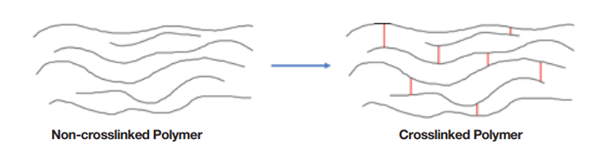
Crosslinking adds to the long-term durability, important for insulation materials, since it allows the purchase price of the insulation to be spread over a longer service life, with minimal maintenance, disruption or replacements required.
Stage 2
Extremely high pressures and temperatures are used to dissolve nitrogen gas into the solid slabs.
Stage 3
The nitrogen-saturated slabs are put through a second, lower pressure and temperature cycle where the pressure is released to allow free expansion of the material into sheets of foam.
Benefits of nitrogen expansion
The Zotefoams manufacturing process described above produces a premium foam compared to other foam insulation materials that are expanded using chemical foaming agents;
High purity foam
- Low odour and outgassing
- Noncorrosive and non-toxic
Isotropic properties
- Free expansion means the foam cells have no specific orientation
- Properties consistent throughout material
Completely closed cell
- This type of structure gives superior insulating properties compared to open-cell materials.
- Closed-cell materials more effectively reduce moisture and gas penetration through the material, due to the lack of a continuous gas network through which these substances could be transferred.
Zotefoams vs Chemically Blown
The combination of Zotefoams unique manufacturing processes, and the natural properties of PVDF polymers make for a high-performance insulation foam material ideally suited to any production processes that need to cycle between low and high temperatures on a regular basis. Such changes of operating temperature will not impact the long-term thermal performance of the material, giving the product a long-term life cycle.
Zotefoams
- Completely closed cell
- Consistent cell size
- Low outgassing
Chemically blown
- Up to ~10% open cell
- Inconsistent cell size
- Directional properties
- Residual chemicals from blowing agents T-FIT® Hygiene continued
Exclusion of Liability
Zotefoams Inc. (together herein referred to as ZOTEFOAMS), accurate. Any liability on the part of ZOTEFOAMS or any subsidiary or holding company of ZOTEFOAMS for any loss, damage, costs or expenses directly or indirectly arising out of the use of such information or the use, application, adaptation or processing of any goods, materials or products described herein is, save as provided in ZOTEFOAMS’ conditions of sale (“Conditions of Sale”), hereby excluded to the fullest extent permitted by law.
Where ZOTEFOAMS’ goods or materials are to be used in conjunction with other goods or materials, it is the responsibility of the user to obtain from the manufacturers or suppliers of the other goods or materials all technical data and other properties relating to those other goods or materials. Save as provided in the Conditions of Sale no liability can be accepted in respect of the use of ZOTEFOAMS’ goods or materials in conjunction with any other goods or materials.
Where ZOTEFOAMS’ goods or materials are likely to come into contact with foodstuffs or pharmaceuticals, whether directly or indirectly, or are likely to be used in the manufacture of toys, prior written confirmation of compliance with relevant legislative or regulatory standards for those applications may be requested from ZOTEFOAMS, if appropriate. Save as provided in the Conditions of Sale no liability can be accepted for any damage, loss or injury directly or indirectly arising out of any failure by the user to obtain such confirmation or to observe any recommendations given by or on behalf of ZOTEFOAMS.
ZOTEFOAMS MAKES NO WARRANTIES EXPRESS OR IMPLIED, EXCEPT TO THE EXTENT SET OUT IN THE CONDITIONS OF SALE, AND HEREBY SPECIFICALLY EXCLUDES ANY IMPLIED WARRANTY OF MERCHANTABILITY OR FITNESS FOR A PARTICULAR PURPOSE WITH RESPECT TO ANY GOODS, MATERIALS OR PRODUCTS DESCRIBED HEREIN.
T-FIT® and ZOTEK® are registered trademarks of Zotefoams plc. All rights reserved. Issue 1 April 2024